For engineering and program leaders bringing AI into high-stakes work
The AI gave you a confident answer. Can you defend it?
The tools are faster and surer than ever. When the model says one thing and the room says another, the decision, and any failure analysis that follows, still lands on you.
I help you own the decision. Watch this one-minute video, then take the free 10-minute Readiness Check.
- NASA Langley
- Northrop Grumman (Aerospace Sector President’s Award)
- Lockheed Martin
- IBM
- GM
- >$100M in award payments on one qualification program
- Grace Hopper, NSBE
The moments that bring leaders to me
Tools are getting faster and more confident. That is a gift—and it is also why the questions matter more than ever. These are the moments when a good question is worth the most.
Before you buy the tool
You're about to bring an AI or digital-engineering tool into design or certification work. What will it actually decide for you?
Before the milestone review
The review rests on model or AI outputs. You want to know what they really tell you before the room moves on.
After an answer didn't hold
An output was wrong, or nobody could defend it. You want the next decision to stand on firmer ground.
When someone asks who owns it
Your boss or board asks, "What's our AI plan, and who owns it?" You want to answer with confidence.
Free · about ten minutes
The Digital Thread Readiness Check
Ten questions, answered for one real program. They cover the decision itself, who owns it, what you're uncertain about, and whether your tools are pitched at the right altitude.
At the end you'll see where you stand—Go, Conditional or Hold—and the one area I'd look at first. Your answers stay in your browser.
Your result
Now booking
The Decision Review
A half-day working session with you and your key people, before a major AI-tool, model or milestone decision. We work through the questions together, out loud, until the decision is yours.
What we know
And where each fact comes from.
What we're assuming
Named plainly, so nobody is surprised later.
Who owns each piece
A person, not a tool or a slide.
What would change our mind
So you know when to revisit the call.
Within a week you receive a written decision brief covering all four. Test or analysis, every choice carries some risk—the brief records how you decided, so it stands up if a failure analysis ever asks why. Fixed price.
Questions That Decide
One question at a time, with the thinking behind it. Open any of them and take it into your next review—they're yours to keep.
"What is the source for this claim?"The question I've asked for decades, and why it still saves programs.Read moreClose
It sounds like a challenge. It isn't. It's a courtesy to everyone in the room, because it gives us permission to slow down for one minute and check that we know what we think we know.
Most of the expensive surprises I've seen didn't come from missing data. They came from a number that traveled from one slide to the next until nobody remembered where it started. Traceability is just this question, asked every time.
AI makes this more important, not less. A model can give you a confident answer in seconds. Ask where it came from before you build a decision on it.
"Who owns this if the model is wrong?"A tool can produce the answer. Only a person can own the decision.Read moreClose
"The team" is not an owner, and neither is the tool. If no one can be named, no one is watching the assumptions underneath the output.
Before an AI or model output goes into a review, I ask for a name next to it: the person who understands what went in, what came out, and what would make it wrong.
That isn't about blame. It's about making sure someone is close enough to the answer to notice when it stops being true.
"What would change our mind?"Decide in advance what evidence would make you revisit the call.Read moreClose
Every decision rests on assumptions. The strongest teams write down, before they decide, what result would send them back to the table.
In qualification work, test and analysis both reduce risk, but neither removes it. Ground rules, test boundaries, procedures and configurations all leave something uncovered—there's a limit to resources. Naming what would change your mind is how you keep track of the risk you chose to carry.
It also protects you later. If a failure analysis ever asks why you decided what you did, the answer is already written down.
Speaking
Invite me to speak
I love a room full of people who build things. I speak with engineering teams, leadership groups, conferences and campuses about owning your decisions when AI and models are in the room—and about the confidence it takes to ask the question nobody else is asking. Workshops are hands-on, so your group leaves with questions they can use on Monday.
Where I've spoken
Talks I'm glad to give
Speaker bio
For event organizers—please use as writtenPrenthis Davis Aguilar is an aerospace flight systems engineer with design, manufacturing and test experience in the automotive, aviation, space and telecommunications industries. She currently serves as a GS-15 Aerospace Engineer at NASA Langley Research Center, where she helps advance the future of space instrumentation systems. Alongside her federal service, she is the founder and President of Epic Solutions Group, a technology consulting firm, and Lopolopo Inc., a 501(c)(3) nonprofit that empowers women in STEM through workforce development, technical job training and educational grants.
She spent more than 17 years at Northrop Grumman, where her leadership as Lead Avionics Qualification Engineer earned the Aerospace Sector President's Award. Her career also includes General Motors, AT&T Bell Labs, IBM and Lockheed Martin. For more than a decade she led professional outreach and diversity initiatives, helping steward nearly $2 million in educational donations on behalf of the Northrop Grumman Foundation.
She holds a B.S. in Mechanical and Aerospace Engineering from Cornell University, where her STEM journey is featured in Wall of Wonder: Cornell Women Leading the Way in Science, Technology and Engineering, and an M.S. in Systems Engineering from Stevens Institute of Technology. Her work has been recognized with the NASA Group Achievement Award and the AIAA NASA Engineering Team of the Year.
Download headshot
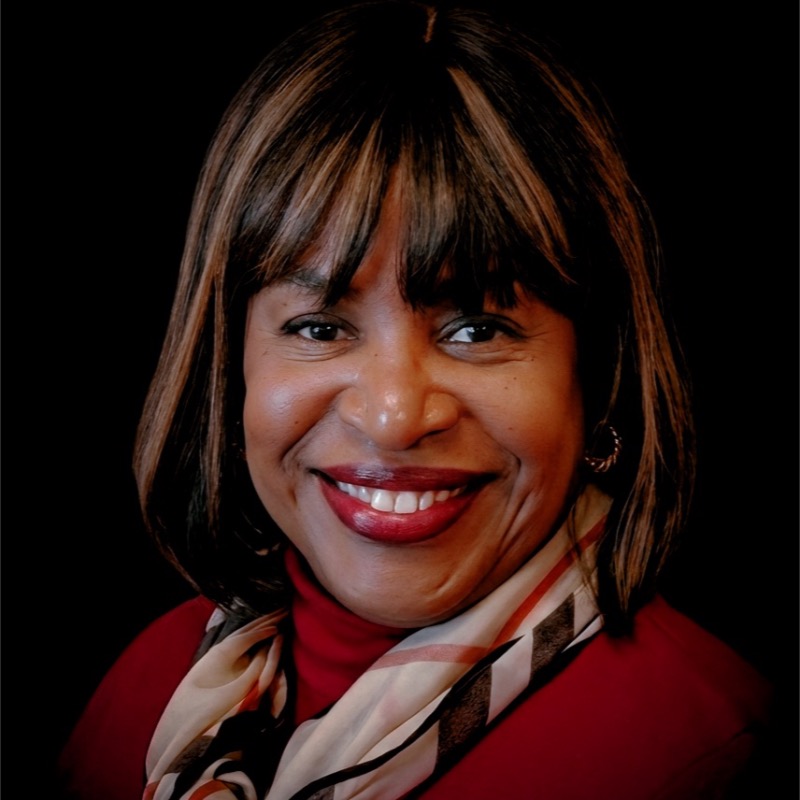
Hi, I'm Prenthis Davis Aguilar.
I'm an aerospace flight systems engineer with decades of experience in design, manufacturing and test in the automotive, aviation, space and telecommunications industries. Today I'm at NASA Langley Research Center; before that, Northrop Grumman, Lockheed Martin, IBM and General Motors. I've qualified avionics, built model-based engineering practices, and sat in more design reviews than I can count.
Early on, I learned to ask one simple question: "What is the source for this claim?" It isn't a challenge—it's a courtesy. It gives everyone in the room permission to slow down and make sure we know what we think we know. Over the years I've seen that programs rarely struggle for lack of data. They struggle because of the questions nobody asked.
I learned that most clearly in product qualification. Analysis is cheap—and getting cheaper with AI—but wrong assumptions and inputs are expensive. Challenging them through traceability, the core tenet of systems engineering, helped one qualification program I worked on earn more than $100 million in award payments. Testing isn't a cure-all either. Ground rules, test boundaries, procedures and configurations reduce risk, but they don't eliminate it. So I quantify the risk that remains and write down how we decided, in case a failure analysis ever needs to know why.
Now that AI makes answers cheap and confident, that question matters more than ever. My work is helping leaders ask it—and the ones that follow—so the decision stays theirs.
B.S., Mechanical and Aerospace Engineering, Cornell University · M.S., Systems Engineering, Stevens Institute of Technology
One good question, now and then
I'll send you a new question when I write one, with the story behind it. No noise—just something worth taking into your next meeting.
I look forward to hearing from you. —Prenthis